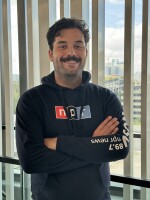
Columbus City Council member Rob Dorans said an ideal city council system for him would include a mix of what are now entirely "at-large" members elected by the entire city and true district members voted on only by residents within set boundaries.
Dorans wrote in a Columbus Dispatch opinion piece last week that he voted against the charter amendment in 2018 that changed how the city elects council members. This system passed, expanding the council to nine members and keeping them as "at-large" representatives, but adding a district residency requirement.
Dorans told WOSU Tuesday this system is "confusing" and "stupid," and said he will call a public hearing later this month to push for a change. A hearing on April 28 will take place at 5:30 p.m.
Dorans' announcement comes as a grassroots proposal called "Our City Our Say" seeks support to change the council system to a true ward system, using the current map boundaries set in place for the nine council members. The proposal could make the November ballot if petitioners gather enough signatures.
His idea would provide a mix of these two systems.
"I think a true hybrid system (would be) where you have some seats that are true ward seats as compared to what we currently have with at-large representation. I think that balances a couple of different priorities," Dorans said.
The new reform effort was sparked by November's election for the District 7 seat in central Columbus that saw City Council member Tiara Ross win the election city wide, but lose within District 7 to challenger Jesse Vogel.
Dorans said he doesn't know if council will come up with a counter proposal or compromise. The council did compromise with a group pushing a ballot issue this May that could create an alternative emergency response team to police officers for substance abuse and mental health calls.
"I just know that the time is now for us to take up this question and if a proposal comes out of that, great," Dorans said. "I would like to see one, but also I am one of nine members. So, you know, I'm hopeful that my colleagues will generally engage in this because I know many of them have said that they're interested to take up this question," Dorans said.
He didn't say whether there's enough support for change on council, but that there is interest in having a bigger discussion.
The "different priorities" Dorans said he would like to balance are keeping voices on council that think about certain issues with a city-wide lens. He specifically pointed to housing and homelessness.
Dorans claimed ward systems can lead to "traditional NIMBYism," or a "not in my backyard," mentality on council. He pointed to studies done by a University of Notre Dame professor that argue this.
'That is difficult, and again, in a growing city that needs housing of all kinds, of all price points across almost every neighborhood in Columbus and right now, we have a system that allows folks to be supportive generally of housing across neighborhoods without the fear of, you know, losing their next election," Dorans said.
Something that is common in Columbus elections is developers donating tens of thousands of dollars to candidates like Dorans, Columbus Mayor Andrew Ginther and Columbus City Council President Shannon Hardin.
Running city-wide elections is also an expensive endeavor and money from developers is often seen as influencing city policy on issues such as the recently passed Columbus bond issue.
When asked, Dorans said it's a fair criticism that running an election citywide is too expensive, especially since the city's population is more than any single district for the U.S. House of Representatives.
"It's not for the faint of heart. And it takes a lot of resources and takes a long time in order to make that happen, which is why I think it is fair to ask out loud, how do you structure a system that does allow a different pathway for folks to run, again, potentially in an a ward structure," Dorans said.
Dorans said the public hearing will provide a good opportunity for open-ended discussion about this issue. He said there will be a city staff presentation about the history of the city's district system. He also said his goal is to hear from residents.
"There's still one right answer to this question I think we should really take some of this time and lean into the research, lean into really evaluating how these structures have an implication on the choices that elected officials make on behalf of of their constituents," Dorans said.
Our City Our Say" campaign manager Cole Wojdacz said in a statement the group is excited to see Councilmember Dorans acknowledge its argument that the current system is broken and needs to be fixed.
"Columbus residents want to be represented by someone who lives in their neighborhood and is accountable to their neighbors - not corporate interests or political insiders," Wojdacz said. "Folks want to be represented by someone who lives in their neighborhood; who cares about the pothole in the road because they hit it every day too; who knows that the park being discussed for sale is a community hub because they take classes at the rec center or their kids play soccer there."
Wojdacz said voters are hungry for a system that makes sense, which she says the Our City Our Say proposal does.