

More than 85 years ago, a spooky nightclub attraction drew crowds to downtown Columbus. It was called The Catacombs, and it featured a macabre crypt tour alongside lively bars, music and a restaurant.
The club was inspired by European history, particularly Rome, which has extensive underground catacombs filled with millions of human bones.
A souvenir matchbook from the club printed the origin story on the inside flap. It explains that early Christians, who did not want their tombs and religious ceremonies disturbed, built subterranean catacombs for protection.
"The original galleries of the Catacombs of Rome were said to cover a distance of nearly 600 miles in subterranean passages," the promotional text reads. "We have attempted to duplicate a portion of what we thought would be the most interesting of these passages."
Why exactly someone thought this would be a good theme for a nightclub has been lost to history. But the club opened on Aug. 6, 1940 and there was a lot of buzz.
The Catacombs received glowing press coverage when it opened, including a photo essay published in LIFE Magazine. The Columbus Dispatch called it a "humorous, realistic and scary lesson in history combined with a nightclub that would be outstanding without… the elaborate atmosphere."
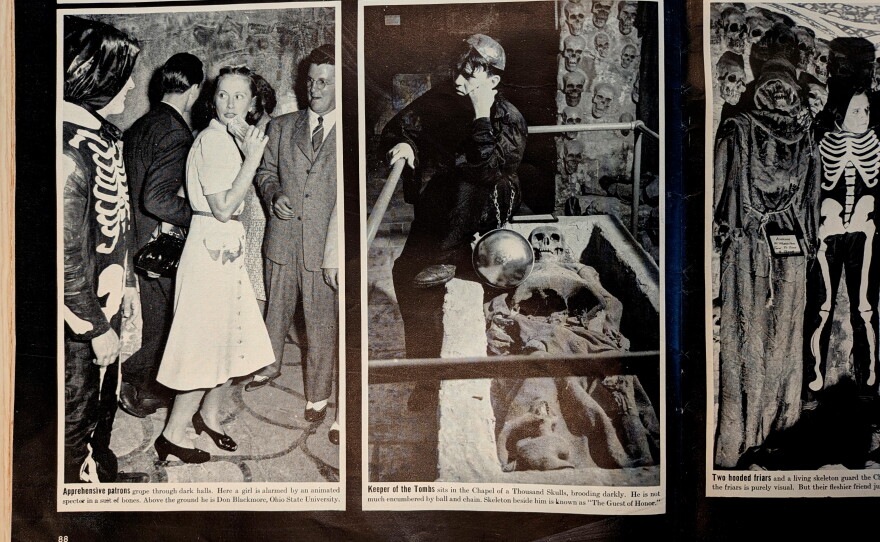
Ralph Morse/LIFE Magazine
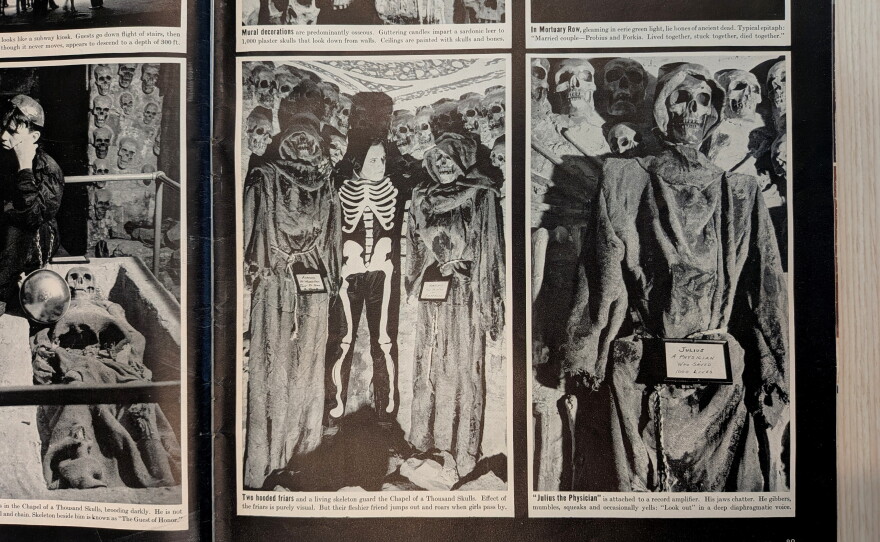
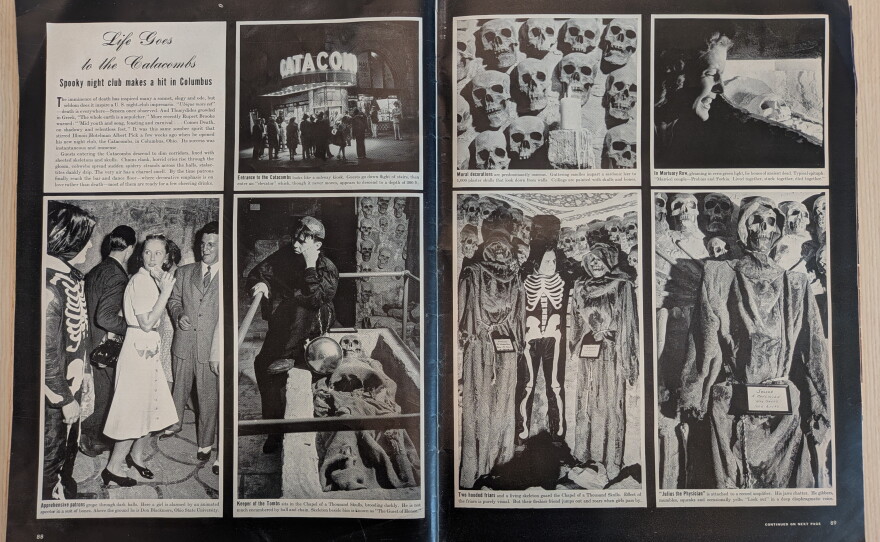
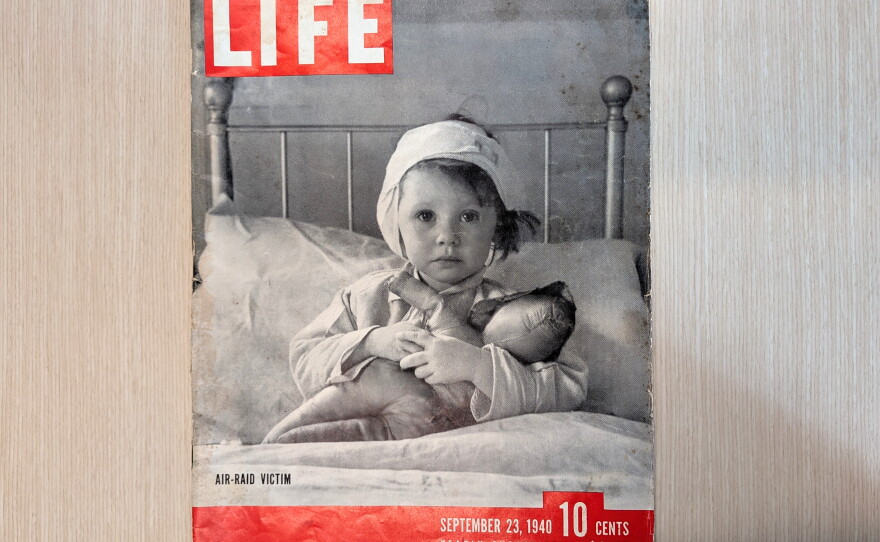
Visitors who pulled up to the Chittenden Hotel at the corner of Spring and North High streets would see bright neon letters spelling "Catacombs" wrapped around the corner of the building. After descending a staircase, they'd meet an attendant dressed in a monk’s robes who led them into a prop elevator that appeared to lower them 300 feet below the surface.
Next, visitors entered a dimly lit series of chambers and passages. One crypt was called "The Chapel of 1,000 Skulls." Skeletons were nearly everywhere visitors looked, and cobwebs brushed against their faces as sounds of moaning and rattling chains filled the air. Someone in a skeleton costume might jump out of the darkness.
When that spooky tour was over, visitors found a bar called the Catacomb Caverns. The mood then shifted to more silly than scary. There was an arcade with pinball machines, a dance floor and a cheeky restaurant called the Nut House, where the waitstaff threw peanuts and insulted customers.

The Catacombs club was part of a big investment and revamping of the Chittenden Hotel in 1940. By then, the Albert Pick chain of hotels acquired the hotel, and it was under the management of Robert I. Griffith. While we can't confirm that the Catacombs was his idea, he is credited with creating a signature drink called the "Zombie."
The Chittenden Hotel has a wild history all its own. To say the hotel was cursed might be a stretch, but it met with a fair share of tragedy.
Henry Chittenden opened the first hotel in 1889, but it burned down a year later. He then rebuilt and opened the second hotel in 1892. That building also burned down a year later.
Local historian Doreen Uhas Sauer has written about the history of the Chittenden Hotel and said that the owner’s tenacity was impressive.
"Every time one of the buildings burned—no insurance on any of it—Henry Chittenden had already invested $300,000 of his own money, and decided, quite late in life, to have the last Chittenden hotel we remember built with the Moorish towers and Spanish verandas and everything," Uhas Sauer said.

That third hotel was designed by local architects Frank Packard and Joseph Yost. It stood as a notable architectural landmark for decades until it was torn down in the 1970s.
Uhas Sauer said the hotel was considered high-class and exotic in its heyday.
"It was absolutely amazing," Uhas Sauer said. "They had the fine food. They had a dome over their restaurant on the top floor which brought in the natural light. They had the Purple Cow, which was kind of like a snack bar, but it attracted a lot of the young people at the time."
The Catacombs closed in July 1941, though the exact reason is unknown. It could be that people grew tired of the gimmick, or maybe the theme of death was less appealing because of World War II.
What can be said is that for a brief period, Columbus was home to one of the most unique nightclubs in the country.

Thanks to Kyle Schriner for submitting this question. To submit your idea to Curious Cbus, use the form below.


