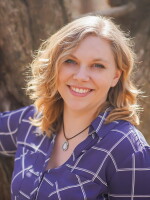
On a crisp autumn evening in Granville, Noa Holland mixed ingredients for gochujang vegetable stew and cinnamon rolls at a large wooden table.
"Right now, we're preparing for our community dinner," Holland explained.
The free dinner for Denison University students is held every Friday night at the Homestead.
For half a century, the small, student-lead sustainable community has operated about a mile from Denison's main campus.
The little cluster of cabins in a field is a world unto itself.
Homestead students raise chickens. They garden. They use the compost from their toilets to fertilize a pollinator garden. In the cold months, they tend to Earl, the wood-burning boiler that heats the two cabins where they sleep.
"At the Homestead, we really feel like we can learn how to take care of our own space, and how to foster community and how to live with intention," Holland said. "Compared to campus, it's a much more adult experience out here. "
Holland and the other Homesteaders believe theirs is a unique community among U.S. college campuses. Denison biology professor Bob Alrutz founded the Homestead in 1977.

Alrutz and his first cohort of students wanted to create a self-reliant, democratic community that also would serve as an experiment for agricultural and living practices. Despite some hiccups over the decades, the community endured.
Until now. Denison University announced it will end the program — at least in its current form — this spring.
Holland said after this spring semester, the university will no longer allow students to live at the Homestead.
"We feel like the shutdown is almost like the loss of, you know, your home. It's like getting evicted, right?" Holland said.

Students seek answers
Holland continued assembling dinner in the dim light of Cabin Bob, the Homestead's "community center." Built in the late 90s, the strawbale cabin is named after Alrutz.
It's a cozy and chaotic place, from the plethora of mismatched mugs by the sink to the axe stuck fast in a block of wood by the door.
Students have decorated the textured walls with swirls of blue and pink and splashes of green. Cast-iron pans hang above a wood-burning stove. Well-worn furniture huddles in corners. Here and there are old hats, signs, paper hearts — little things that past students have left behind.
Holland said the Homesteaders don't know what will happen to Cabin Bob and the residential cabins, Earl the boiler, the chicken coop or the land itself. They're frustrated because they feel the university has provided few answers about the impending shutdown.
In a statement, Ric Hall, Denison's vice president for student life, said the school is ending the Homestead program because of "declining student participation over many years and the significant long-term investments needed to sustain the program and its facilities."
Denison junior and Homesteader Eva Beals said she and her fellow "Homies" have debated those claims with the university.
"They've given us no actual evidence for any of it," Beals said. "They refuse to give us any financial documents, any actual numbers or data."

All 12 beds at the Homestead are currently filled. Holland and Beals said their community dinners average about 60 people, but have drawn as many as 150 students — an impressive number at a school with a total enrollment of about 2,500.
"And we pay full room and board while we are heating our own homes with firewood that we chop," Holland said.
Passing down knowledge and tradition
Holland feels like the university gave up on the Homestead after the COVID-19 pandemic.
"Quaratine itself was very hard for the Homestead," Holland said. "There (was) a brief period of time when no one could live at the Homestead and then people were quarantined, so they couldn't really do Homesteady things."
Holland said that after the pandemic, the university cut some of the Homestead's resources. At the same time, COVID-19 interrupted the flow of shared knowledge. Incoming Homesteaders had to relearn a lot.
"The Homestead is really reliant on the passing down of knowledge from generation to generation of Homesteaders," Holland said.
Beals understood the importance of mentorship at the Homestead. She said that when she moved to the Homestead, the established Homies and active alumni taught her the run of things. She had hoped she could do the same for future Homesteaders.
"I want that opportunity to be that person for incoming homies and to teach them how to take my place and have that passing down of tradition, of culture, of ethos, of skills and knowledge," Beals said. "And I want this place to be a space that can kind of tie me back to Denison."


Save the Stead
In the hopes of saving their home — or at least reaching some kind of compromise with the university — Homesteaders launched the “Save the Stead” campaign.
They made posters and spread information about the Homestead and the shutdown online. They started keeping a list of students who attended community dinner to prove that there was ample interest in the Homestead, even from students who did not live there.
After their first demonstration this semester, the university offered Homesteaders “bridge housing” so they could live together in a small house after the Homestead shuts down, Holland said.
Denison's Hall said on Monday that the proposed site is closer to campus and has "comparable space and improved facilities."
"It is our goal that the elements of the Homestead that have endeared it to students — sustainable living, informal self-governance and delegation of responsibilities, and a place where both residents and non-residents find community — will live on at the new location," Hall said.
Hall had previously said the university was in "close conversation" with concerned students and alumni and was working to find a space that honored the Homestead’s history and preserved its spirit.

But Holland and Beals felt a new version of the Homestead wouldn’t be the same.
"It just sucks that we won't be able to leave legacy because it won't exist anymore," Beals said.
"We love this place. We love the land. And there's really no great alternative to the Homestead, besides what we have here," Holland said.
With the chickens asleep in their coop, more Homesteaders filtered into Cabin Bob to help with the cooking. They gathered around the big table, chopping vegetables and rolling dough.
A pair of students trekked outside into the pitch-black night to show some visitors Earl. They counted down as the boiler depressurized and then pulled the big door open. Together, they stacked firewood by the light of their cell phones.
Soon, other students would make the long, dark walk from main campus for another night of community and homecooked food at the Homestead.