

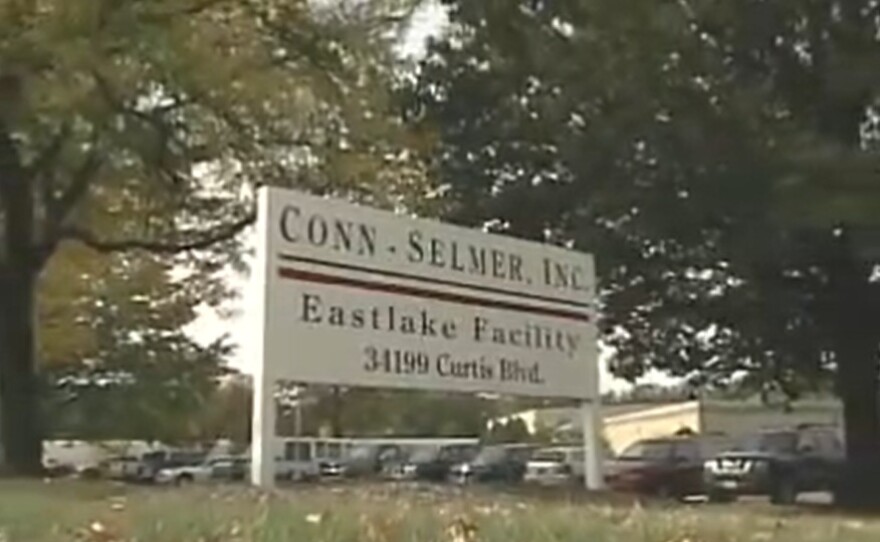
After 60 years, it’s the coda for brass instrument production at the Conn-Selmer factory in Eastlake. About 150 employees learned in January the plant would shutter by the end of June.
In the 1940s and ‘50s, the company made instruments for greats like Glenn Miller, Tommy Dorsey, J.J. Johnson, Dizzy Gillespie and Charlie Parker” according to former employee and tour guide, Pete Cumming. He worked at the Eastlake facility for 23 years until being laid off during the pandemic.
The plant is owned by Steinway Musical Instruments. Most of their 150 employees working in Northeast Ohio are represented by the UAW labor union, which blasted Steinway’s owner, hedge fund billionaire and Trump ally John Paulson, after the company announced its plans in January. Conn-Selmer and the union did not respond to requests for further comment.
The company’s history started in Cleveland in 1893 with instrument repairman Hendersen White.
“He had a little shop and then he had another shop on East 9th and then he built the factory on 5225 Superior Avenue,” Cumming said.
White died in 1940 and was eventually succeeded by his wife and daughter. Production moved to Eastlake in 1966. At the time, the company’s French horns were actually made in Elkhart, Indiana.
Richard King, longtime principal horn player for the Cleveland Orchestra, said those instruments are highly prized today. When the company moved production of the French horns to Texas in 1972, he said he noticed a difference.
“When they moved to Abilene, the cylinders weren't tapered anymore. And it probably had to do with money. Everything has to do with money and manufacturing, I would imagine,” King said.


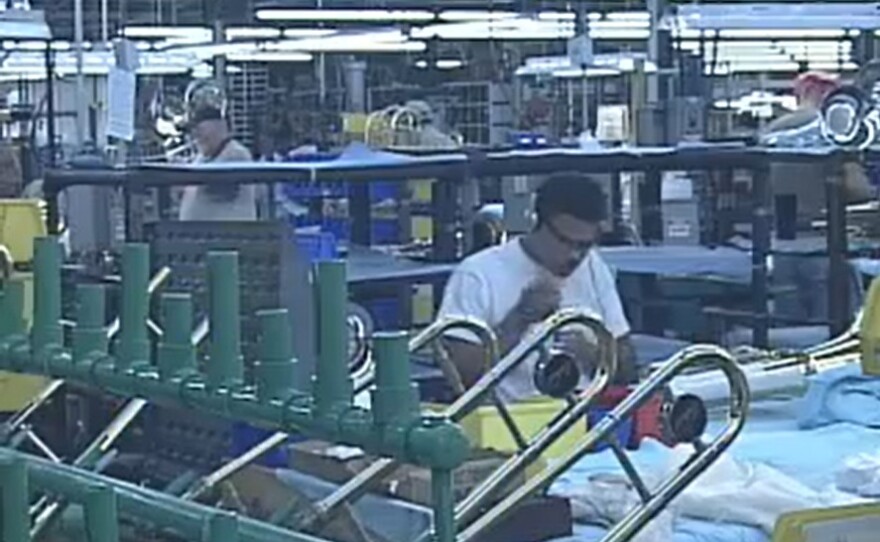
King is still a member of the orchestra’s horn section, where all of the players use Conn’s model 8D made in Eastlake. He describes the instrument’s character as “dark.”
“It requires maybe a little more work, a little more air to make a big sound,” he said. “You can still get a lot of variety of the color of the timbre and so forth.”
That “dark” sound also applies to the Eastlake tubas, according to Chris Blaha, a tuba professor at the University of Akron. He’s sad to see the plant close because he frequently took music majors and engineering students there for tours.
“If they have interest in engineering, product design and music, what a natural fit … to be involved with the design, development, manufactur[ing] of musical instruments,” he said.
Blaha runs the university’s annual TubaChristmas. He estimated that half of the instruments on stage each year are from Conn-Selmer.
“They make some of the best B-flat tubas and sousaphones in the history of history,” he said. “Especially with the high school participants and players, you're going to see a lot of their instruments represented on stage.”
Professional French horn production now moves to Elkhart, while the rest of Eastlake’s product is headed reportedly to China.
